



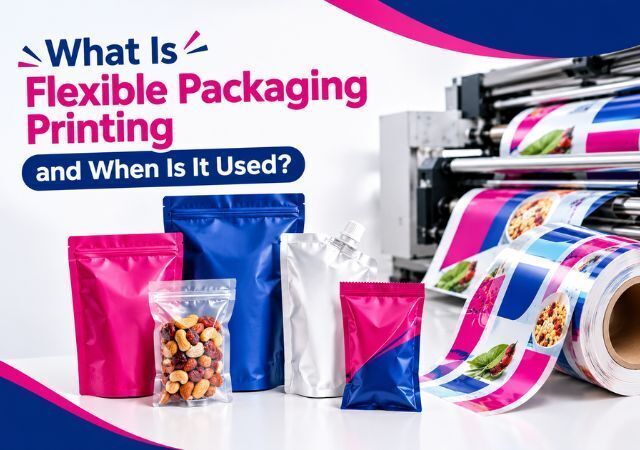
Packaging protects products while also communicating important information and supporting brand identity. For pouches, bags, films, sachets, and other flexible formats, printing adds product details, graphics, branding, barcodes, and other essential elements.
Flexible packaging printing is the process of printing on materials that can bend, fold, or change shape. Common examples include films, pouches, bags, wrappers, sachets, and rollstock. Materials may include plastic films, paper, foil, or laminated layers.
The printing process involves more than appearance. Factors such as ink adhesion, color consistency, image quality, material type, finishing, and package construction can all affect the final result.
What Is Flexible Packaging Printing?
Flexible packaging printing applies branding, product information, graphics, barcodes, and other content to formats such as pouches, bags, films, wrappers, sachets, and rollstock. These packages may use film, paper, foil, or laminated materials depending on the product and its requirements.
The printing process also considers factors such as ink adhesion, color consistency, image quality, material properties, and finishing to achieve a clear and reliable final package.
What Materials Are Used for Flexible Packaging Printing?
Flexible packaging can be produced from several different materials. The choice depends on the product, packaging format, required barrier properties, durability, appearance, and manufacturing requirements.
Polyethylene (PE)
PE is commonly used for flexible packaging films because it offers flexibility, toughness, and moisture resistance. It can be found in bags, pouches, liners, and other packaging applications.
Polypropylene (PP)
Polypropylene can provide clarity, strength, and resistance to moisture and heat. Different forms, including BOPP and CPP, are used for various flexible packaging structures.
Polyester (PET)
PET is known for strength, dimensional stability, and good print performance. It is frequently used as part of multilayer packaging structures.
Nylon
Nylon can provide strength and puncture resistance, making it useful in packaging where additional durability is needed.
Aluminum Foil
Aluminum foil can provide strong barrier properties against light, moisture, oxygen, and other external factors. It is often incorporated into multilayer packaging rather than being used as the only packaging layer.
Paper
Paper can be used in certain flexible packaging applications where its appearance, texture, or other characteristics fit the product requirements.
Laminated Materials
Some flexible packages combine two or more materials. A laminated structure may bring together different properties, such as printability, strength, flexibility, moisture resistance, and barrier protection.
How Does Flexible Packaging Printing Work?
The exact production process can vary depending on the packaging material and printing method. However, flexible packaging printing generally involves several important stages.
1. Artwork Preparation
The process begins with the packaging artwork. Logos, product information, images, colors, barcodes, and other elements are prepared according to the package dimensions and printing specifications.
Dielines and safe areas are also important because packaging artwork may need to wrap around a pouch or other flexible format.
2. Prepress
Before production, the artwork is reviewed for issues such as resolution, color setup, bleeds, text placement, and barcode readability.
Prepress preparation helps identify problems before printing begins and supports more consistent results.
3. Material Selection
The appropriate film, paper, foil, or laminated structure is selected based on the intended application.
The material can affect how ink behaves, how colors appear, how the package performs, and how the finished product is converted.
4. Printing
The selected printing method is used to transfer the artwork onto the packaging material.
Digital, flexographic, and rotogravure printing are among the methods used for flexible packaging, with each having different production characteristics.
5. Finishing and Conversion
After printing, the material may go through additional processes such as lamination, slitting, cutting, sealing, or pouch conversion.
The exact finishing steps depend on the package format and its intended use.
6. Quality Inspection
The finished material can be checked for print quality, color consistency, registration, text clarity, defects, and other specifications.
Quality control is especially important when packaging contains essential information such as ingredients, instructions, lot information, or barcodes.
What Printing Methods Are Used for Flexible Packaging?
Different production requirements call for different printing technologies. Three common approaches are digital, flexographic, and rotogravure printing.
Digital Printing
Digital printing transfers artwork directly from a digital file without printing plates. It is suitable for short runs, multiple SKUs, variable designs, and projects requiring frequent artwork changes.
Flexographic Printing
Flexographic printing uses flexible plates to transfer ink onto packaging materials. It is well suited for medium- to high-volume production and repeat packaging runs.
Rotogravure Printing
Rotogravure printing uses engraved cylinders to apply ink to packaging materials. It is commonly used for large-volume projects requiring detailed and consistent printing.
When Is Flexible Packaging Printing Used?
Flexible packaging printing is used when products need packaging that combines a flexible or adaptable format with printed branding and product information.
Food and Snack Products
Flexible packaging is commonly used for snacks, dry foods, confectionery, coffee, and tea. Printed packaging can include branding, ingredients, nutrition details, and preparation instructions.
Coffee and Tea Packaging
Printed pouches and bags can display product names, flavors, roast information, preparation details, and brand elements.
Pet Food
Flexible packaging is used for pet food, treats, and smaller portions. Printed graphics help identify products and sizes.
Personal Care and Cosmetic Products
Pouches, sachets, and refill packs can display product names, ingredients, instructions, and branding.
Pharmaceutical and Healthcare Products
Flexible packaging can be used for individual healthcare products and portions. Clear printing helps present instructions, warnings, and identification details.
Household Products
Cleaning products, detergents, and refills can use flexible packaging to combine product information with clear branding.
Single-Use and Portion Packaging
Sachets and small packages are useful for condiments, samples, personal care products, and other single-use items.
What Are the Benefits of Flexible Packaging Printing?
Flexible packaging printing offers several practical advantages depending on the product and packaging structure.
Brand Visibility
Flexible packaging provides a printable surface for logos, colors, product images, and other brand elements.
Product Information
Important information can be printed directly onto the packaging rather than relying entirely on separate labels or inserts.
Design Flexibility
Flexible formats can accommodate different package sizes and shapes, allowing packaging designs to be adapted to different products.
Lightweight Packaging Formats
Many flexible packaging structures use thin materials, which can help reduce packaging weight and support efficient storage and handling, depending on the package design.
Printing Method Flexibility
Businesses can choose among different printing methods depending on production quantity, artwork requirements, material, turnaround, and other project factors.
What Factors Should You Consider Before Choosing a Printing Method?
There is no single printing method that is right for every flexible packaging project. Several factors should be considered before production.
Production Quantity
The number of packages required can influence which printing technology makes the most sense.
Shorter runs may favor digital printing, while larger repeat production runs may make flexographic or rotogravure printing more practical.
Number of SKUs
Businesses with many product variations may need to produce several designs. Digital printing can offer flexibility when multiple versions or frequent artwork changes are involved.
Packaging Material
The selected material can affect ink adhesion, color appearance, finishing, and overall print performance.
Artwork Complexity
Detailed graphics, multiple colors, fine text, barcodes, and other design elements should be considered during the printing process.
Turnaround Requirements
Projects with tight deadlines may require a printing approach that supports the required production schedule.
Finishing Requirements
Lamination, slitting, pouch making, sealing, and other finishing processes should be considered when planning the complete packaging production process.
Flexible Packaging Printing vs. Rigid Packaging Printing
Flexible and rigid packaging serve different purposes and can have different printing requirements.
Flexible Packaging | Rigid Packaging |
Pouches, bags, films, sachets, and rollstock | Bottles, jars, boxes, and containers |
Can bend or fold | Maintains a fixed shape |
Often uses films, paper, foil, or laminates | Often uses glass, metal, plastic, or board |
Suitable for many lightweight applications | Useful when structural rigidity is required |
Can support a variety of package formats | Often designed around a fixed container shape |
The right option depends on the product, protection requirements, package design, production volume, and intended customer experience.
Why Print Quality Matters in Flexible Packaging
Flexible packaging often serves as both a protective layer and a visual communication tool. Poor registration, inconsistent colors, unreadable text, or damaged graphics can affect the appearance and usability of the package.
Quality control is therefore important throughout the process, from artwork preparation through printing and finishing.
Clear text is especially important for product instructions and required information, while consistent colors and graphics help maintain brand identity across different packaging runs.
Frequently Asked Questions About Flexible Packaging Printing
What is flexible packaging printing?
It is the process of printing graphics, text, branding, barcodes, and product information on films, pouches, bags, foil, paper, and laminated materials.
What products use flexible packaging?
Food, snacks, coffee, tea, pet food, cosmetics, healthcare products, household goods, and single-use products commonly use flexible packaging.
What are the main flexible packaging printing methods?
The main methods are digital, flexographic, and rotogravure printing. The right choice depends on quantity, material, artwork, and production needs.
Is digital printing suitable for flexible packaging?
Yes. Digital printing can work well for short runs, multiple designs, and projects requiring frequent artwork changes.
What materials can be printed for flexible packaging?
Common materials include PE, PP, PET, nylon, aluminum foil, paper, and laminated structures.
What affects the cost of flexible packaging printing?
Cost depends on material, package size, printing method, quantity, number of designs, colors, and finishing requirements.
Final Thoughts
Flexible packaging printing combines materials, printing technology, artwork, and finishing to create packaging that protects products while communicating important information and brand identity. It is used across food, beverages, personal care, healthcare, household products, pet care, and more.
The right printing method depends on the material, production volume, artwork, number of variations, turnaround time, and finishing requirements. ABC Printing Company can help businesses understand these factors and identify flexible packaging printing options suited to their specific project needs.
